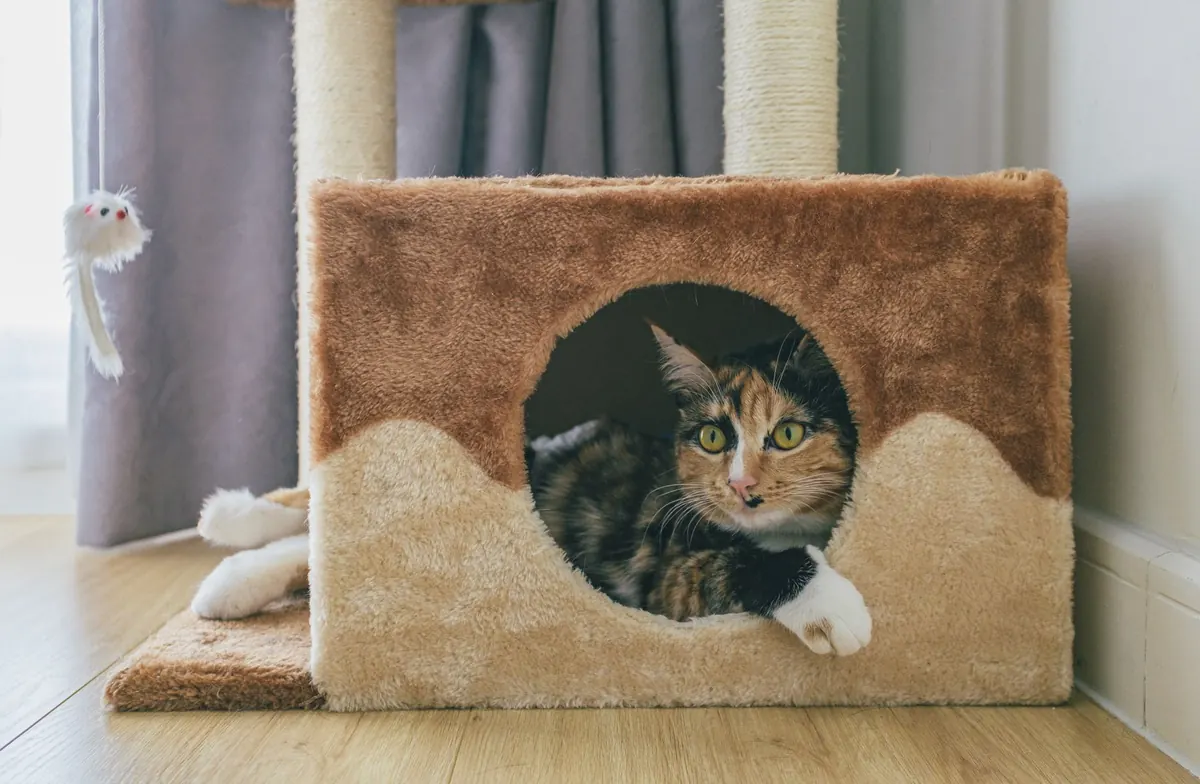
A rescue cat arrives with a history you don't know. Maybe she was surrendered when someone moved. Maybe he lived outdoors and has never used a litter box indoors. Whatever the story, the first month is less about training a cat than about convincing one that your home is worth trusting.
That gets easier when you treat the month as a setup problem rather than a countdown. Get the room, the box, and the scratching post right, keep the routine boring, and most of the behavior problems new owners worry about never appear.
Set Up a Safe Room Before You Open the Carrier
Choose one small room: a bathroom, a spare bedroom, a laundry room with the door shut. Not the living room, and not your bed on night one. A cat with too much space to patrol will pick one hiding spot and stay there for a week, and you'll spend that week wondering what went wrong.
- A door that closes and stays closed, with a rolled towel along the bottom if there's a gap.
- Two hiding spots: a cardboard box tipped on its side with a blanket inside, and a covered bed.
- Litter box at one end of the room, food and water at the other. Cats would rather not eat where they eliminate.
- A scratching post heavy enough not to tip when a cat leans on it.
- A wide, shallow water bowl.
- Something to climb: a small cat tree, a sturdy shelf, a cleared windowsill.
Leave the carrier in the room with the door propped open. It already smells like the cat, which makes it the safest object in the house for the first few days. Then sit on the floor and be boring. Read aloud, fold laundry, do nothing. Short visits several times a day beat one long one, and a hand reaching under the bed sets trust back by days.
Litter: Simple Setup, Fewer Problems
The most common mistake is buying a covered, scented, self-cleaning box before the cat has even arrived. Start plain: an open box with low sides, unscented clumping litter, two to three inches deep. Covered boxes trap smells, and a nervous cat doesn't need a small dark room with one exit.
One box per cat, plus one, is the usual guideline. In the safe room you may only have space for a single box; add the second one when she starts using the rest of the house. Scoop twice a day, and don't move the box during the first month. Cats memorize locations, and a relocated box often becomes an ignored one.
If she eliminates outside the box, don't scold her. Check whether the box is clean, whether it sits in a quiet spot, and whether you've changed the litter. If nothing obvious explains it, call your vet. Changes in litter habits can be the first sign of a urinary problem, and those turn serious quickly in cats.
Scratching Options Your Cat Will Actually Use
Cats scratch to shed the outer layer of their claws, stretch, and leave scent marks. Offer a vertical option and a horizontal one, because cats have strong preferences and you won't know yours until you watch her.
- A sisal rope post tall enough to stretch against fully, and steady enough not to wobble.
- A flat corrugated cardboard scratcher on the floor.
Place the post near where she sleeps; cats scratch when they wake up and stretch. If she's already attacking the sofa arm, stand a scratcher directly in front of it for a few weeks. You're redirecting, not negotiating. Praise her when she uses the right surface and stay silent when she uses the wrong one. Punishment mostly teaches a cat to scratch when you aren't looking.
Week by Week: Let the Cat Set the Pace
Week 1: hiding is normal
Expect her to disappear for a day or two, sometimes longer. Sit in the room anyway. Offer food from a spoon if she's interested, but don't push. What matters this week is basic: is she eating, drinking, and using the box? A cat who stops eating for more than a day needs a vet's attention, not more patience.
A cat who hides isn't rejecting you. She's checking whether the room is safe, and she'll finish that check faster if you stop interrupting it.
Week 2: the room becomes familiar
She starts coming out while you're there, maybe chasing a wand toy, maybe rubbing against your leg on the way past. Begin short play sessions — five minutes, two or three times a day — and let her catch the toy at the end. Feed at the same times daily. Cats trust patterns more than they trust affection.
Week 3: opening the door
Once she's relaxed with you in the room and using the box reliably, prop the door open and let her explore the hallway while the safe room
Photo: Huy Phan / Pexels