The first hot weekend of the year catches almost everyone off guard. Your dog is bouncing at the door, the sky is blue, and a forty-minute loop around the block seems harmless. Then the panting continues long after you are home, and the water bowl is still full. Heat rarely announces itself. It builds quietly through small decisions: the hour you chose, the surface underfoot, the water you remembered to pack. A little planning keeps summer walks enjoyable instead of risky.
Time Walks Around the Heat, Not Your Schedule
The hottest stretch of the day usually runs from mid-morning until late afternoon, and that is when a dog's normal cooling system starts to struggle. Dogs cool themselves mainly by panting, and humid air makes panting far less effective. A dry 85-degree afternoon is easier on your dog than a muggy 78-degree one.
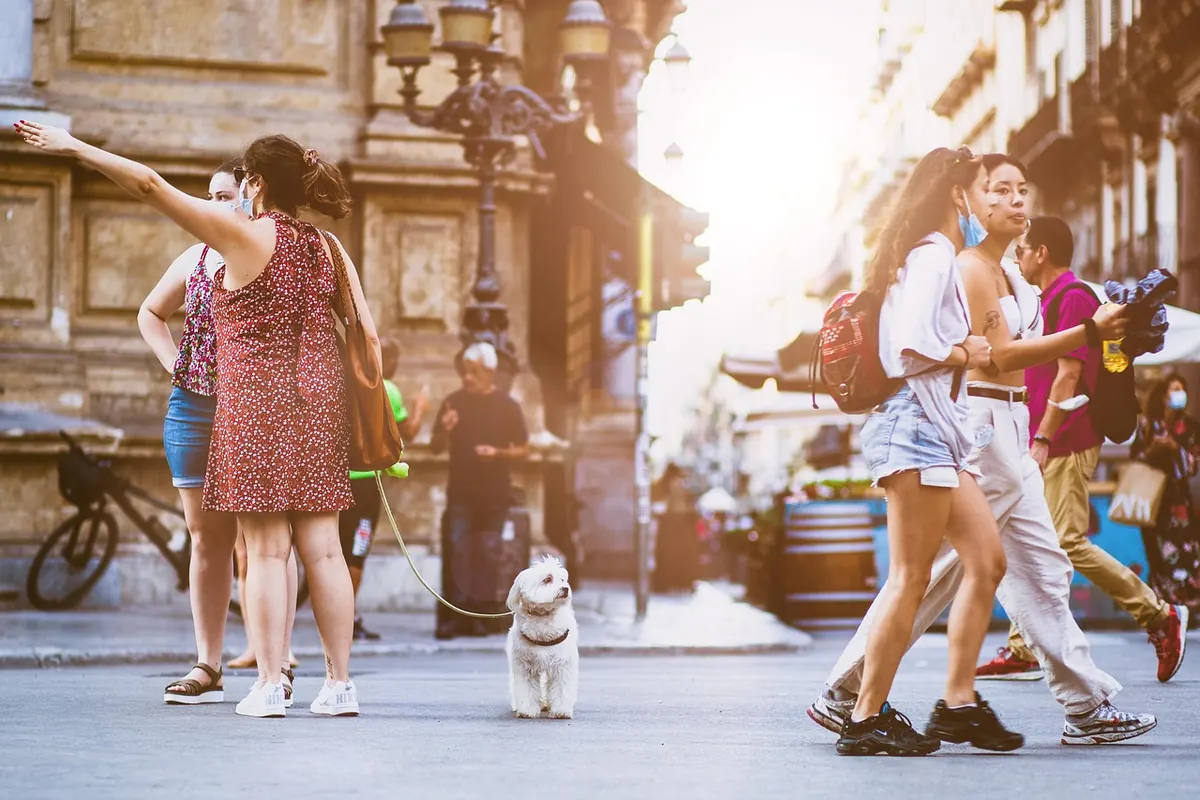
In practice, that means two shorter walks instead of one long one. Aim for early morning, then again once the sun is low. Many dogs handle a quick late-evening toilet break on grass without trouble, but the pavement may still hold heat hours after sunset, so check it before you commit to a full loop.
If your dog is high-energy and the weather kills your usual route, swap distance for mental work. Ten minutes of sniffing on a shaded lawn, a frozen stuffed toy, or a few rounds of find-it in the living room can tire a dog out more than a hot mile of walking.
The Five-Second Pavement Test
Place the back of your hand flat on the pavement and hold it there for five seconds. If you cannot keep your hand down, the surface is too hot for paws. This test takes seconds and works on any surface, at any time of day.
Paw pads are tough, but they burn. A dog who suddenly refuses to walk, limps, or keeps lifting a foot is telling you something. So is a dog who licks his pads obsessively once you get home. Blisters and peeling pads can take days to heal and are painful the whole time.
Surfaces That Fool You
- Asphalt and dark brick: absorb sun all day and stay hot into the evening.
- Concrete patios and pool decks: often hotter than the lawn a few feet away.
- Sand, artificial turf, and metal: can be uncomfortable even in mild weather.
- Safer choices: grass, packed dirt, and shaded paths. On streets, let your dog walk on the grass strip beside the sidewalk when you can.
Water, Shade, and a Mid-Walk Plan
Carry water and a collapsible bowl on every warm-weather walk, even short ones. Most dogs will not drink properly from a bottle, and a bowl makes it easy to offer a few laps every fifteen or twenty minutes. Offer, do not force. A dog who keeps turning away from the bowl is probably not thirsty yet.
Plan your route around shade. Trees, awnings, and the shaded side of the street make a real difference, and knowing where the shade falls lets you pause without turning the walk into a stop-and-start ordeal. On very hot days, cut the route in half and add the second half in the evening.
Early Signs of Overheating
Overheating rarely starts with a dramatic collapse. It begins with small signals that are easy to miss if you are distracted.
- Panting that is heavier or louder than usual, or that does not slow down after a rest
- Thick, ropey drool, or drool that suddenly increases
- Bright red gums or tongue
- Skin that feels unusually hot to the touch
- Lagging behind, lying down mid-walk, or refusing to move
- Wobbling, glazed eyes, confusion, vomiting, or diarrhea
What to Do in the First Five Minutes
Get your dog out of the sun and into shade or air conditioning. Wet the ears, paws, belly, and groin with cool — not icy — water, and set a fan on low if you have one. Offer small sips rather than a full bowl. Then call your veterinarian for guidance. Heatstroke is a medical emergency, and it can worsen quickly even when a dog seems to be recovering. When in doubt, get professional help rather than waiting it out at home.
The Backyard Checklist
A backyard feels safer than a walk, but dogs left outside in the heat face the same risks with fewer chances to be noticed.
- Track the shade. Check where it sits at 11 a.m., 2 p.m., and 5 p.m. A yard that looks shaded in the morning may be full sun by lunch.
- Skip the dog house. A closed dog house can trap heat and be hotter inside than the air around it.
- Provide two water bowls in different spots, and refresh them twice a day. Tipped bowls happen.
- Set up a shallow pool or sprinkler for dogs who enjoy water, and a damp towel on a shaded porch for those who do not.
- Never tie a dog out in direct sun. Without the ability to move into shade, a dog cannot cool down.
- Test the hose first. Water sitting in a hose in the sun comes out scalding. Run it onto the ground before filling a bowl or spraying your dog.
And keep the car rule simple: a dog stays home unless he is coming inside with you. Cracked windows do not make a parked car safe on a warm day.
Dogs Who Need Extra Care
Some dogs feel heat much sooner than others. Flat-faced breeds such as pugs, Boston terriers, and bulldogs have narrower airways, which makes panting less efficient. Thick-coated and double-coated dogs, seniors, puppies, overweight dogs, and dogs with heart or breathing conditions also struggle sooner.
For these dogs, shorten walks rather than skipping them, keep to grass and shade, and aim for the coolest parts of the day. If your dog has an existing heart, lung, or breathing condition, ask your veterinarian what exercise limits make sense for the summer months.
A Simple Summer Routine
Most of summer safety comes down to rhythm. Walk early, do a short grass-only break in the middle of the day, and walk again once the pavement has cooled. Test the ground with your hand before every outing. Bring water and a bowl even when you plan to be quick. Keep the bowls in the yard full and shaded, and check the yard for shade before you leave your dog out.
If you notice panting that will not settle, drooling, or a dog who suddenly wants to stop, end the outing and cool him down. Ten minutes of caution costs you nothing. A burned paw or a heat episode can cost you a week of worry and a vet visit. Your dog will happily trade a shorter walk for a cooler, safer afternoon.
Photo: Sammy-Sander / Pixabay