A bag of kibble smells rich and inviting the day you open it. Three weeks later it smells like almost nothing, or faintly like old cooking oil. Nothing visible has happened — no mold, no bugs, no obvious sign. That's the trouble with stale dry food: it fails quietly. Fats oxidize, flavorings fade, and vitamins lose potency long before your dog turns up his nose at the bowl. In most cases the food was fine when you bought it. Storage did the damage.
The fixes are cheap, and most take seconds a day. They start with knowing what you're actually fighting.
What Actually Makes Kibble Go Stale
Dry pet food is cooked, dried, then sprayed or coated with fat and flavorings, often along with a vitamin and mineral blend. That coating is what makes the food appealing, and it's also the most fragile part. Three things break it down:
- Oxygen. It reacts with the fats on the surface of the kibble. The result is oxidation, which we smell and taste as rancidity — that stale, crayon-like or slightly sour note.
- Moisture. Kibble is dry by design. When it absorbs humidity from the air it softens, loses its crunch, and creates conditions where mold and bacteria can grow.
- Heat and light. Warmth speeds up the chemical reactions that spoil fat, and light — especially direct sun — does its own damage to the coating and to some vitamins.
So good storage is really about four things: limiting air, limiting moisture, limiting heat, and limiting light. Nearly every mistake below breaks one of those rules.
Mistake 1: Dumping the Bag Into a Bin
This is the most common one. You buy a big bag, pour it into a plastic bin, and throw the bag away. It feels tidy and organized. It also strips away your best protection.
The original bag is usually a multi-layer material with a barrier designed to keep oxygen and moisture out. A typical plastic storage bin, even a nice one, is not. Every time you open the lid, the air inside exchanges with the room. Old crumbs and fat residue at the bottom of the bin start going off, and the fresh food sits on top of them.
There's a second problem: the bag carries the best-by date and the lot code. If there's ever a recall, or if your dog gets sick and your vet asks what he's been eating, that code is how you find out whether his food is involved.
Keep the food in the bag. The bin is for structure and tidiness, not for protection.
The practical version: fold or roll the top of the bag down, clip it, and either leave it in a cool cupboard or set the whole sealed bag inside a bin with a gasket-sealed lid. If the bag is too tall for the bin, cut the top down, but keep the label panel with the date and lot code intact.
Mistake 2: Storing Food in the Wrong Spot
Where the food lives matters as much as what it lives in. A few places that quietly ruin kibble:
- The garage or shed, where temperatures swing widely. Warm air holds more moisture, and when the temperature drops overnight that moisture condenses — sometimes right into the food.
- On top of the fridge. It feels convenient and out of the way, but that's a warm spot.
- Next to the dryer, oven, dishwasher, or a heating vent.
- Under a sunny window, where light and heat work together.
The refrigerator is a mixed bag. It's cold, but it's also humid, and every time you pull the food out, condensation forms on the kibble. For everyday feeding, a cool, dark, dry cupboard or pantry is the better choice. If you buy in bulk and want to hold a spare bag for months, a well-sealed bag in the freezer works, as long as you let it come fully to room temperature before opening so moisture doesn't condense on the food. Freezing pauses spoilage; it doesn't sterilize anything.
Mistake 3: Scooping With Whatever's Handy
A measuring cup rinsed and put back damp, a scoop left sitting in the bin, hands still wet from washing the bowl — all of them move water into dry food. Even a small amount creates soft spots where spoilage starts first.
Keep one dry scoop that lives with the food and gets washed and fully dried on a regular schedule. Don't store it inside the kibble.
The other half of this mistake is topping up. Pouring a fresh bag over the last few cups means the oldest food, and the fine dust and fat at the bottom, never gets used. Instead, let the bin or bag run down to empty, wipe it out, and refill. First in, first out — the same rule a grocery store uses.
One more habit worth breaking: leaving food sitting in the bowl all day. If you mix in wet food, the clock runs even faster. Pick up what isn't eaten within a reasonable window.
Mistake 4: Buying a Bag You Can't Finish in Time
Big bags are cheaper per pound, so it's tempting to buy the largest one on the shelf. But freshness is measured from the day you open the bag, not the day you buy it. If your dog eats a cup a day and you bring home a forty-pound bag, the last third may sit around for months.
Do a quick estimate: how much does your dog eat daily, and how long will that bag realistically last? For most households a size that gets finished in a few weeks is a better buy than the biggest bag in the aisle. Your vet can help you confirm how much your dog should be eating if you're unsure.
Also check the best-by date on the bag before it goes in your cart. A bag that's been sitting on a warm loading dock for a year starts out behind. If you stock up during a sale, keep one bag in the pantry and freeze the rest, sealed, rather than leaving them all in a warm room.
How to Tell If Kibble Has Turned
Your nose and hands are good tools here. Fresh kibble smells like its flavoring — meaty, savory, whatever the label promises. Rancid food smells like old oil, crayons, or paint. Beyond smell:
- Feel: a greasy film on your fingers, or kibble that's soft, clumped, or crumbly instead of dry and separate.
- Look: a dull or darkened color, fine dust caked at the bottom of the container, or any fuzzy, discolored patches.
- Your dog: sniffing and walking away, eating slowly and reluctantly, or an upset stomach after a change of bag.
If you see or smell mold, throw the whole batch out. Don't scoop around it — mold can spread through dry food in ways you can't see, and some molds produce toxins. If your dog has eaten moldy food and shows vomiting, tremors, or unusual lethargy, contact your veterinarian right away.
A Storage Routine That Works
None of this requires special equipment. It's mostly a handful of habits:
- Keep the food in its original bag, folded and clipped, or set inside a clean bin with a sealed lid.
- Write the date you opened the bag on the bag itself.
- Store it cool, dark, and dry — a pantry shelf, not the garage, not over the fridge.
- Use one dedicated scoop, kept dry, washed and dried between bags.
- Empty and wipe the container before refilling rather than topping up.
- Buy a size you'll finish in a few weeks, and check the best-by date before buying.
- Keep the label and lot code until the bag is gone, just in case.
Do those seven things and you'll notice the difference the next time you open a bag: the food smells the way it did on day one, the kibble stays crisp, and your dog keeps eating it with the same enthusiasm. Replacing a bag that's gone off costs far less than dealing with a dog who's been eating rancid food for weeks — and it takes about five minutes a month to prevent.
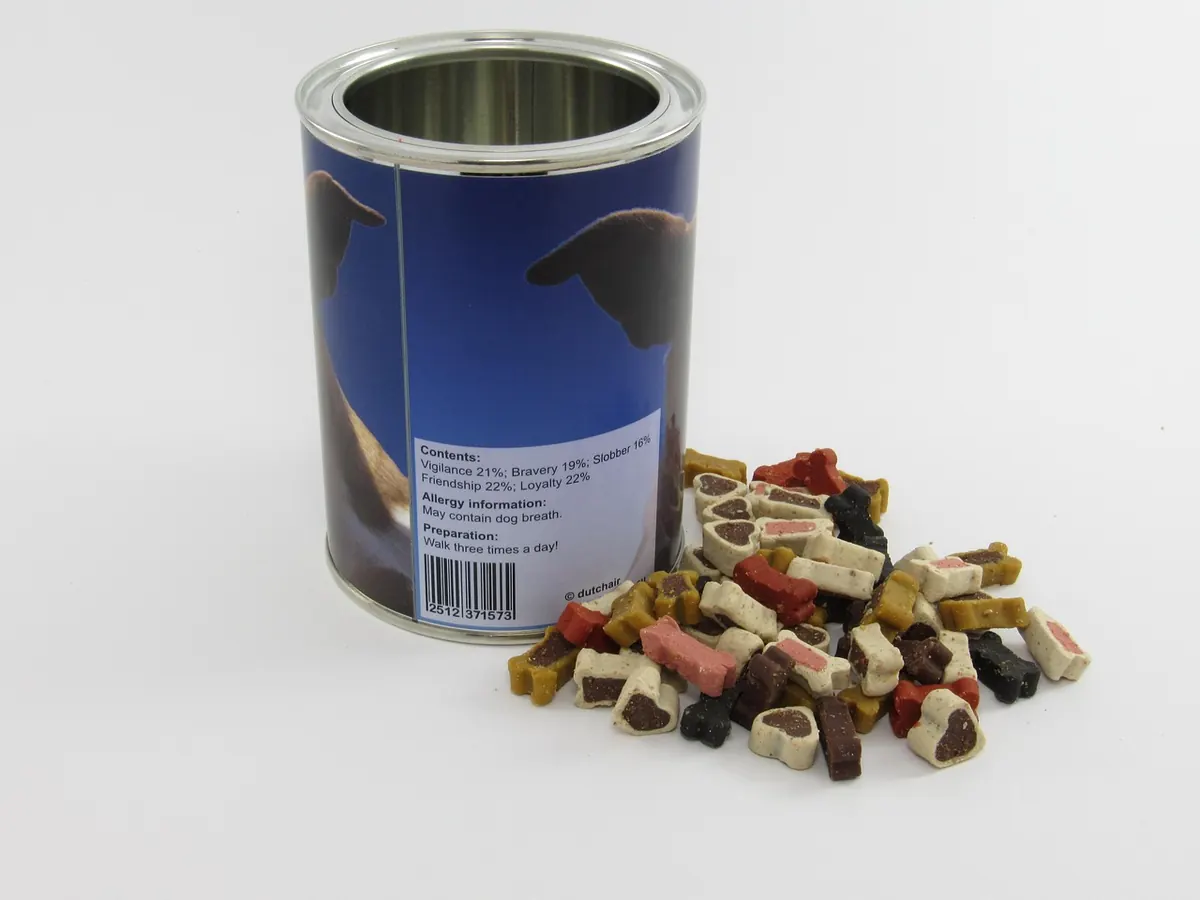
Photo: DutchAir / Pixabay