The new bag is in the kitchen, your dog has already sniffed it twice, and you're trying to remember whether you're supposed to mix it with the old food for two days or two weeks. The honest answer is closer to two weeks. Your dog's gut is a living system of bacteria and enzymes that has adapted to whatever you've been feeding, and changing the recipe overnight gives that system nothing to work with. What follows is usually soft stool by day two, a restless night, and a dog who suddenly looks suspicious of dinner.
Switching foods doesn't have to be dramatic. It takes a little measuring, a bit of patience, and a willingness to slow down the moment your dog's stool tells you to.
Why an Abrupt Switch Backfires
Two foods can look identical in the bowl and be very different inside. Fat and protein levels, fiber sources, grain content, and how the food is cooked all change the way your dog digests it. Even moving between two formulas from the same brand can mean a different fat percentage, and fat is the nutrient most likely to trigger loose stool when it rises quickly.
There's a second reason to go slowly: information. If you swap foods in a single day and your dog starts scratching or having diarrhea, you have no way of knowing whether the new food caused it, whether it was the speed of the change, or something else entirely. A gradual switch isolates the variable, which matters if you end up needing to talk to your vet about it.
Before You Open the Bag
A few minutes of prep makes the whole week easier.
- Count your old food. You need enough to last eight to ten days of mixing. If you're down to a cup or two, buy a small bag of the current food before you start.
- Compare calories, not cups. Different foods pack different calories into the same scoop. Check both labels so you know how the daily amount changes.
- Look at the fat and protein percentages. Small differences are easy. A jump of several percentage points means a longer ramp.
- Call your vet first if your dog is on a prescription diet or has a diagnosed digestive, kidney, heart, or pancreatic condition. Changing those diets isn't a do-it-yourself project.
- Pick a calm week. Not the week of a road trip, a move, or a new puppy in the house.
The 7-to-10 Day Mixing Schedule
This is the standard ramp. A "part" means a measured portion of the total meal, by weight if you have a scale and by volume if the two foods have a similar texture.
- Days 1 and 2 — 25% new. Three parts old food to one part new. Stir it with a spoon so the kibble is evenly blended rather than sitting in layers your dog can pick through.
- Days 3 and 4 — 50/50. One part old, one part new. This is the stage where sensitive dogs often show their first soft stool, so watch the yard.
- Days 5 and 6 — 75% new. One part old food, three parts new.
- Days 7 and 8 — 100% new. Feed the new food on its own, but keep an eye on stool for another three or four days.
- Days 9 and 10 — buffer. If anything looked off in the past two days, hold at whatever ratio was working and repeat it before moving forward.
If your dog has a cast-iron stomach and a history of easy transitions, you can compress this to seven days. If you're switching between very different diets — say, a grain-heavy kibble to a high-protein formula, or dry food to a fresh or raw diet — stretch it out instead. Two to three weeks is not excessive for a big change.
Measure by Weight, Not by Scoop
A cup of one kibble might weigh 90 grams and a cup of another might weigh 115. Feed the same volume of both and you've quietly changed your dog's calorie intake by a significant amount, which can bring its own digestive surprises. A cheap kitchen scale solves this: weigh the old food, weigh the new, and keep the total meal weight roughly where it was.
Mixing textures takes a little more care. If you're combining wet and dry, split the meal so each part is a proper portion rather than pouring a spoonful of canned over a full bowl of kibble. And if your dog is an expert at eating around the new pieces, a splash of warm water or a light crumble of the kibble usually blends things well enough to stop the sorting.
When to Slow the Switch Down
Slightly softer stool on day three or four is common and usually settles on its own. The following signs are different — they mean stop advancing and reassess.
- Watery diarrhea, or loose stool that lasts more than a day or two
- Vomiting, beyond a single isolated episode
- Blood in the stool, black tarry stool, or a large amount of mucus
- Refusing food for more than 24 hours
- Lethargy, hiding, a hunched back, or a belly that's painful to touch
- Constant gas, loud gurgling, or a visibly bloated abdomen
- Itching, paw licking, red ears, or hair loss once the new food is fully in the bowl
Slowing down means going back to the last ratio that produced a normal stool and holding it for three to five days before advancing again — in half-steps this time, not full ones. If your dog reacts even at 25% new food, that formula may not be the right fit, and it's worth talking to your vet before pushing further. Blood, repeated vomiting, or a dog who seems to be in pain needs a phone call to your vet, not a schedule adjustment.
Dogs Who Need a Longer Ramp
Puppies, seniors, small breeds, and dogs with a history of sensitive stomachs all do better with a slow version of this plan. Give them 14 to 21 days instead of 7 to 10, and keep everything else in their day as steady as possible.
That last part matters more than people expect. During the switch, hold off on new treats, new chews, table scraps, and any other dietary experiments. If several things change at once and your dog's digestion goes sideways, you'll have no idea which one to blame. Keep portions at the same times each day, and don't switch again mid-transition because the new food isn't an instant hit. Appetite often takes a few days to catch up.
Keeping the Switch Calm
Write the schedule on the bag with a marker: the date, the ratio, and the next step. Keep the old food sealed and stored the way you normally would, and save the label and lot number from the new bag in case you ever need to contact the manufacturer.
Then let your dog set the pace. A stool that stays firm is permission to move to the next ratio; a stool that turns to pudding is a request for more time at the current one. Most dogs are fully switched in a week and a half with nothing more dramatic than a few extra trips outside. If yours has an ongoing medical condition, is losing weight, or the digestive trouble doesn't settle within a couple of days, get your vet involved — they know your dog's history and can rule out causes that have nothing to do with the food in the bowl.
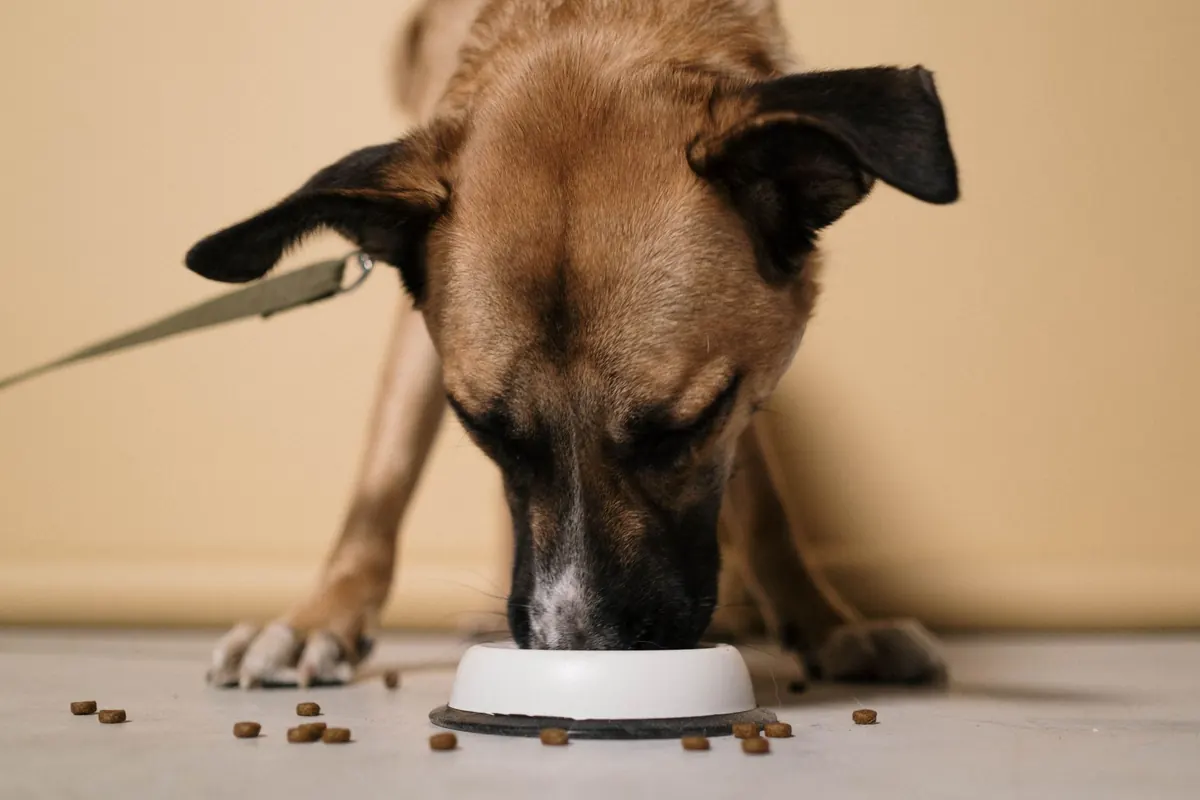
Photo: cottonbro studio / Pexels